


Browse
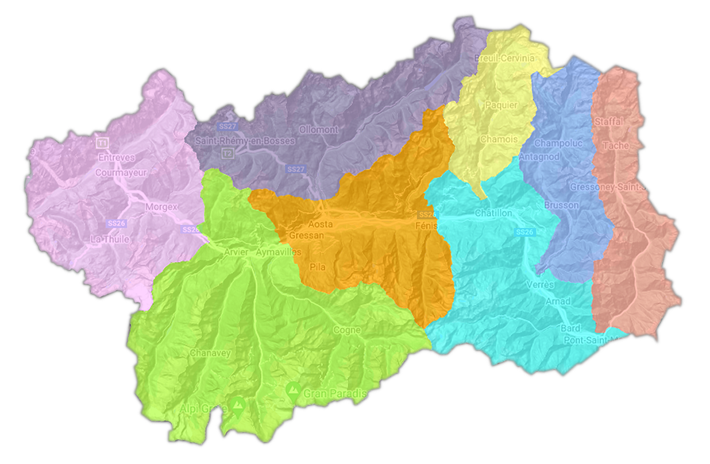

Weather forecast
Meteo
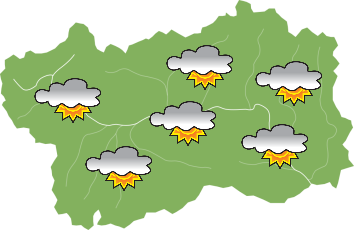
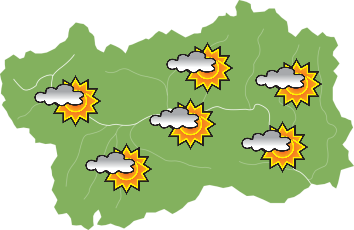
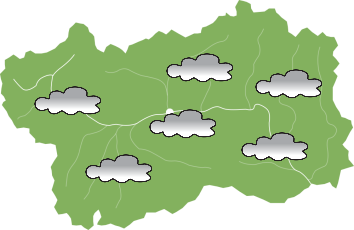
Wednesday 8 April
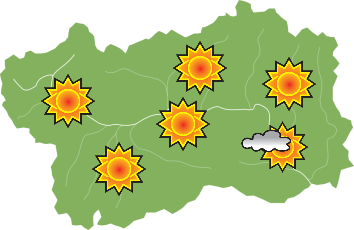
Thursday 9 April
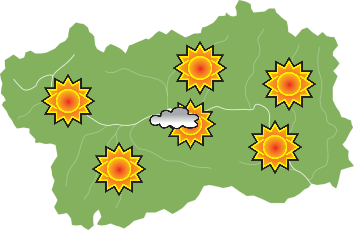
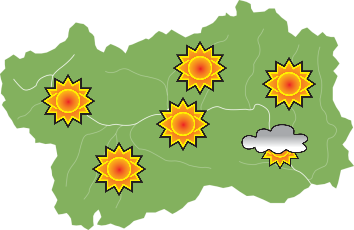
Friday 10 April
Book your Holiday
In ancient times, Guillemore was the point where the two old roads that climbed up the Lys Valley met: one along the right side of the valley and the other along the left bank of the Lys torrent. The Guillemore gorge also marked an important boundary: the one between the Mandement de Vallaise and the Mandement d’Issime et Gressoney, that is, the natural dividing line between the Latin (Franco‑Provençal) cultural area and the Germanic (Walser) one.
The toponym Guillemore appears in several historical variants - Guymour, Guimor, Guymor, Gueymor - a sign of its antiquity. Since the place was strategic and morphologically very distinctive, it is believed that at least part of the name has extremely ancient origins.
The Guillemore ravine and bridge have also inspired the popular imagination, giving rise to various legends.
Legends
The Giant Guillaume
In the depths of the ravine lived a giant named Guillaume, described as a demon trapped in a human body. Travelers and villagers trembled at the mere sound of his approach: his footsteps made the gorge quiver, and the wind carried his roar.
But one day five brave hunters arrived, each with a heart steadier than the last. They crossed forests, torrents, and suspended rocks until they finally stood before the giant.
The battle was fierce: the echo bounced between the walls of the ravine like thunder. And when the monster finally fell, the five heroes raised their arms to the sky, shouting: “Guillaume est mort!”
Their voices intertwined with the breath of the wind, and from that day on, the place took the name Guillemore, in memory of their great deed.
The Barons’ Gallows
When the bridge of Guillemore was still made of creaking wood, hanging like a fragile thought above the abyss, a small oratory stood beside it.
Its roof extended outward like the wings of a bird ready to shield passing travelers, supported by two stone columns.
But those were dark times. It is said that chains hung from the columns, belonging to a gallows, for it was there that the Barons of Vallaise brought the condemned.
As the wind slipped through the beams of the bridge, it seemed to whisper the prisoners’ final prayers, and the rushing waters of the Lys carried those murmurs away like tears meant to be forgotten.
With the passing of centuries, however, the bridge was rebuilt in stone, and the shadows of those grim days faded, leaving only the echo of ancient stories.
The Wicked Fairy and the Orchons
On the jagged rocks of the ravine lived an evil fairy, a child‑snatcher (the Vouleuse d’enfants).
The villagers, fearing her as one fears a sudden storm, began to hate her, and the fairy, offended by such contempt, one day decided to fly away to more welcoming lands.
But she did not leave completely: she abandoned behind her her children, mysterious creatures called les Orchons.
Gigantic, agile as the wind, cunning as foxes, and vengeful like wronged spirits, they moved through the ravine’s gorges, slipping between rocks and paths, making anyone who heard their light, unsettling steps tremble.
Since then, it is said that on the darkest nights strange sounds can still be heard around the bridge… and that they are not only the river or the wind.
See also
Fontainemore
One-day excursions
Fontainemore
Lakes / waterfalls
Various localities
Cultural itineraries
An itinerary to discover the lower part of the Lys Valley, ancient domain of the lords of Vallaise between Piedmont and the Aosta Valley.
At Pont- …