


Browse
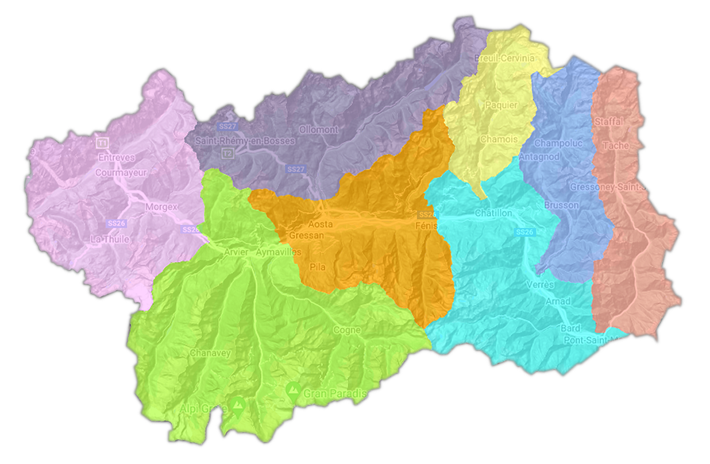

Weather forecast
Meteo
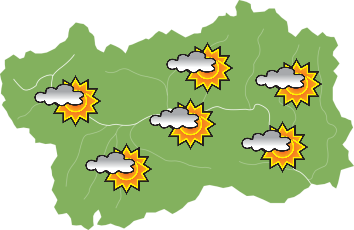
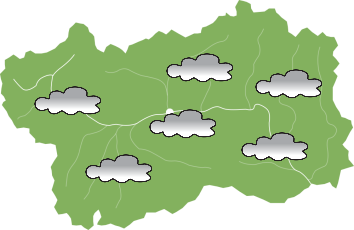
Friday 29 May
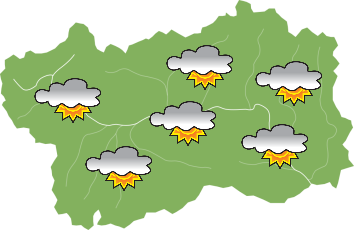
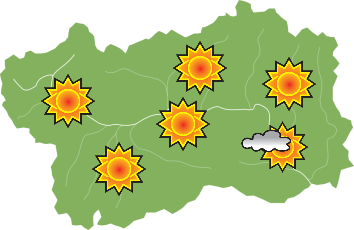
Saturday 30 May
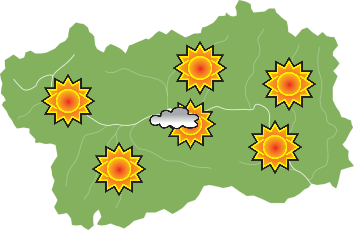
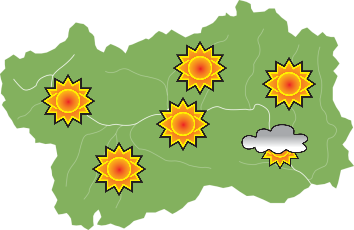
Sunday 31 May
Book your Holiday
How to get here
Usually, the hill road is accessible from mid June to mid October.
Description of the route
A pass between history and nature
Situated at 2,472 metres above sea level, the Great Saint Bernard Pass is a place where nature reveals its full power. Dominated by the peaks of the Chenalette to the north, Mont Mort to the south and Pain de Sucre to the west, the pass opens onto an authentic and evocative environment, where the wind blows almost constantly and weather conditions are extreme: here, snowfall can exceed twenty metres per year, transforming the landscape into a unique natural spectacle.
A millennial route across the Alps
Since Roman times, this pass has been a key route across the Alps. At the summit stood the temple dedicated to Jupiter Poeninus, around which archaeological remains known as the Plan de Jupiter can still be seen. Walking along the final hairpin bends before the pass, it is possible to spot the ancient Roman roadway carved into the rock, a tangible reminder of a time when travellers, merchants and pilgrims challenged the mountains.
The Hospice and timeless hospitality
In 1045, Saint Bernard built the Hospice here, a place of shelter and protection for those crossing the pass, particularly pilgrims travelling along the Via Francigena. Even today, this place retains its vocation for hospitality, telling centuries-old stories of Alpine solidarity and community life.
The St Bernard dogs, a symbol of rescue
Famous worldwide, the Great St Bernard dogs trace their origins back to at least the 16th century. Raised by the canons, they were essential for the safety of the Hospice and for rescuing travellers lost in snow and storms. From these historic activities the St Bernard breed was born, now a universal symbol of loyalty and rescue. During the summer, from June to September, Excursions with the dogs are organised at the Great St Bernard Pass.
In the footsteps of great figures
Over the centuries, the pass has been crossed by countless notable travellers. Among them, the feat of Napoleon Bonaparte stands out: in 1800 he led an army of 40,000 men, horses and artillery across the pass, in a logistical undertaking that required eight days to complete.
Even today, the costumes of traditional carnivals in the Great SaintBernard and Valpelline valleys feature elements that allegorically recall the uniforms of Napoleonic soldiers.
Between nature, views and local flavours
Today, the Great St Bernard Pass showcases the full beauty of high mountain landscapes. The small lake, frozen until late spring, offers striking scenery, while the surrounding panorama invites quiet contemplation.
The panoramic roads leading from Aosta to the pass are especially appreciated by cyclists and motorcyclists, drawn by their scenic curves and the many stopping points and refreshment areas, ideal for a break immersed in the Alpine landscape.
In Saint-Rhémy-en-Bosses, it is possible to visit the facilities where Jambon de Bosses PDO is produced and aged, a refined cured ham matured in hay. Higher up, some mountain pastures offer traditional snacks and the chance to purchase Fontina cheese and other local dairy products.
In winter and late spring, thanks to abundant snowfall, the area is ideal for ski touring; in summer it becomes a paradise for hikers, with routes that allow full immersion in an authentic Alpine environment.
See also
Aosta
Cycling
Continuing the ascent, you reach the mediaeval village of Étroubles, and a few kilometres further on, you …
Saint-Rhémy-En-Bosses
Tunnels / Mountain passes
The Great St. Bernard tunnel is 5798 metres long and has two lanes, one in each direction. The southern entrance on the Italian side is 1875 m above sea …
La Thuile
Tunnels / Mountain passes
Aosta
Motorcycling
Another location to “taste”, in …
Saint-Rhémy-En-Bosses
One-day excursions