


Browse

Weather forecast
Meteo
Friday 29 May
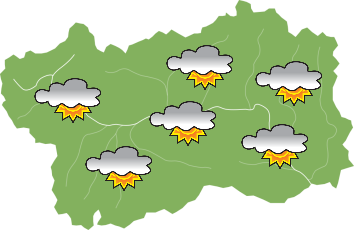
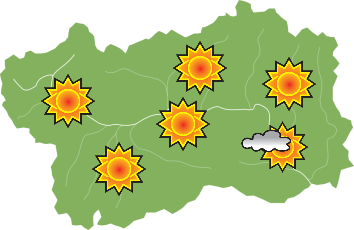
Saturday 30 May
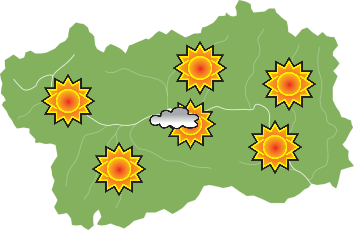
Sunday 31 May

Book your Holiday
The Church of Fontaney is located along the regional road to Perloz, just above the built‑up area of Pont‑Saint‑Martin, in an area characterized by vegetation and numerous water springs, from which the name Fontaney derives (“place of the fountains”).
The building represents a significant testimony to the religious and territorial history of the local community.
Historical Overview
The church was built between 1590 and 1595 by Baron Pierre de Vallaise, on land owned by his family, next to the fortified house. It was dedicated to the Most Precious Body and Blood of Jesus Christ and to the Blessed Virgin Mary.
In 1614 it was elevated to the status of parish church, a role it retained until 1899. With the construction of the new parish church on the plain in 1839, the building was gradually abandoned and stripped of its furnishings.
At the beginning of the twentieth century, the Church of Fontaney was placed under protection as a National Monument, thus avoiding the demolition planned to allow the expansion of the adjacent cemetery.
Throughout the twentieth century, several consolidation and restoration works were carried out, including interventions on the plasterwork (1968) and on the roof (1998).
Since 2009, the church has been returned to the community as a protected historic site, although it remains closed to the public.
Architectural Features
The church has a rectangular plan with three naves, inspired by the layout of Aosta Cathedral, with frescoed pillars and a polygonal apse with an ambulatory.
The interior frescoes, dated 1726, and those on the façade (1600) form an important decorative ensemble, now visible only from the exterior.
On the right-hand side stands the Chapel of the Holy Rosary. The bell tower, once connected to the sacristy, has collapsed.